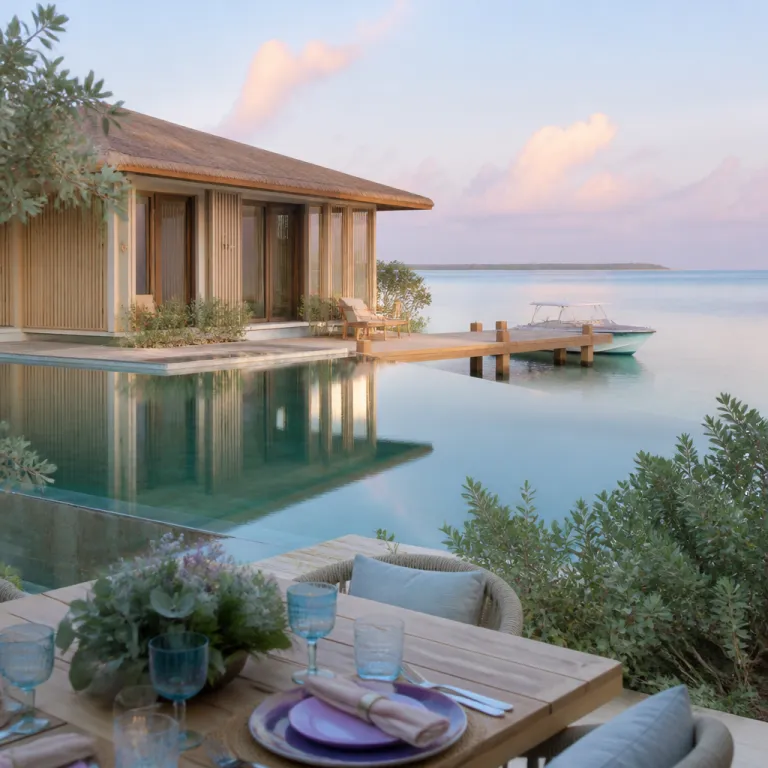
How to read private island luxury hotels value 2026 as a family traveler
Private island hotels sit at the sharpest edge of luxury travel pricing. Room rates can look extreme at first glance, yet the real value in 2026 only appears when you unpack what is bundled into the stay. For premium families, the question is not just cost, but how that price translates into design, freedom and safety for every guest.
Across the market, entry tier private islands often start around 5 000 USD per night, while mid tier and top tier island resorts can climb far higher when you add villas, transfers and activities. A shared seaplane in the Maldives, for example, can add 500 to 1 000 USD per person, while a private boat in the Caribbean can cost a similar amount per crossing. Those headline numbers reflect a specific promise; you are paying for an entire island experience with no day trippers, no road traffic and no competing umbrellas on the beach. The premium also funds conservation, since many resort operators now link each booked night to marine protection or reforestation projects.
To judge private island luxury hotels value 2026 properly, compare the full trip, not just the room. A city grand resort may tempt with a lower nightly rate, yet restaurant bills, kids club fees, spa treatments and boat excursions quickly erode any apparent saving. On a well run private island, much of that spend is already included, so the overall cost feels more transparent and the value you receive is easier to track.
Families should also factor in the rhythm of the stay and the design of the resort. On a private island, children can move between pool, beach and activities without crossing roads or crowds, which changes how parents experience downtime. That sense of relaxed supervision is a hidden part of the overall price, even if it never appears on the invoice.
When comparing tiers, it helps to think in simple bands: entry level islands (from roughly 5 000 USD per night, often with shared transfers and partial board), mid tier properties (higher nightly rates but more generous inclusions such as non motorised sports and kids clubs) and flagship islands (villa heavy, often 10 000 USD plus per night, with private butlers, bespoke excursions and near total buyout options). The apparent jump in price between these bands is less dramatic once you factor in what is already prepaid versus what would be charged as extras in a city hotel.
What the premium really buys: design, silence and guaranteed shoreline
When you pay the premium for private islands, you are buying control over context. The island itself becomes the resort, with architecture, landscaping and lighting tuned to a single narrative rather than competing brands along a crowded coast. That is where private island luxury hotels value 2026 becomes less about square metres and more about how the place feels at sunrise, when only your family’s footprints mark the sand.
Design forward properties such as the forthcoming Zannier Île de Bendor in the French Riviera, with its 93 villas, illustrate this shift toward curated island resorts. Here, every villa, spa pavilion and restaurant is positioned to frame the sea, so guests never feel pushed into public zones to enjoy the view. The result is a luxury private atmosphere where even a short stay feels like a full reset, because the island resort has removed visual noise as carefully as it removes external traffic.
Silence is another line item in the private island ledger, even if it never appears in the availability grid. With no neighbouring bars, no cruise ship horns and no jet skis from other resorts, the only soundtrack is wind, water and the low hum of activities you actually chose. For families, that quiet means children can sleep while adults enjoy late dinners, which subtly increases the value you gain from every evening.
Then there is the shoreline itself, which is where the premium becomes most tangible. On a private island, every guest has guaranteed access to the beach without the dawn race for loungers or the need to check rules about external visitors. That guaranteed access, combined with safe swimming zones and staff who know every child by name, is a core part of private island luxury hotels value 2026 for parents who measure luxury in peace of mind.
For readers tracking how major events distort pricing, the same logic applies that you see in the hotel rate paradox around global tournaments. When demand spikes, only properties with genuine design, service and location advantages can sustain a premium without eroding perceived value. Private islands sit in that category when they deliver the silence, shoreline and safety that families actually use.
Case studies: from Bawah Reserve to the Virgin Islands, when the numbers work
Some islands make the value calculation unusually clear, because the resort design, inclusions and conservation work are tightly aligned. Bawah Reserve in Indonesia is a strong example, where the Bawah Reserve team has created a cluster of overwater villas and beach suites across several small islands, all ringed by a marine reserve. Here, private island luxury hotels value 2026 is anchored in the fact that room rates directly support reef restoration and low impact infrastructure.
At Bawah Reserve, almost every activity that families actually use is included in the stay, from guided snorkelling and non motorised water sports to cinema nights under the stars. When you compare that to a city resort where each activity is charged separately, the total cost on a private island can feel more honest, because you are not constantly signing bills. The same pattern appears at Song Saa in Cambodia, where the island resort model folds conservation fees into the nightly rate rather than adding them as opaque surcharges.
In the Virgin Islands and the neighbouring British Virgin Islands, private islands range from ultra exclusive buyouts to more accessible island resorts with a handful of villas. Here, private-island value for families depends on how many guests share the infrastructure, from boats to kids clubs. A well run island resort in the British Virgin Islands can offer strong returns on the nightly rate when transfers, meals and core activities are bundled, especially for multi generational groups.
Then there are properties such as NIHI on Sumba and its newer outpost on Rote, which are not technically private islands but operate with similar isolation and control over the surrounding environment. NIHI’s villas, surf breaks and riding stables are designed as a self contained world, so the stay feels like time in a private reserve rather than a standard resort. In these cases, the cash value of each night is offset by the density of experiences, from horseback rides at low tide to spa safaris in the hills.
For travelers comparing sea based isolation, it is worth reading about how new generation luxury cruising redefines all inclusive value. The same questions apply on a ship or a private island; how much of the premium is actually used, and how much is simply paying for the right to be away from everyone else.
Family lens: safety, freedom and the quiet power of design
For premium families, the most persuasive argument for private islands is rarely the champagne list. It is the way an island resort can function as a safe, walkable village where children move between pool, beach and activities without crossing a single road. That freedom is a central part of private island luxury hotels value 2026, even if it never appears in the marketing copy.
On a well designed island, villas are often arranged in small clusters, with clear sightlines to the sea and easy access to shared lawns where children can play. Parents can sit on a shaded terrace while younger guests roam within a defined perimeter, which changes the emotional temperature of the entire stay. The resort effectively becomes a private reserve for your family, with staff acting as a discreet security team rather than visible guards.
Many private islands also structure their activities around family rhythms rather than adult only schedules. Morning snorkel trips, afternoon sailing lessons and early evening cinema on the beach allow children to burn energy while adults enjoy the spa or a quiet drink. When those activities are included in the rate, the value from each day is high, because your spending is focused on experiences rather than incidental fees.
Noise control is another under rated benefit that matters deeply to parents. With no external bars or traffic, the only late night sounds usually come from the sea or from carefully managed events, which supports better sleep for younger guests. That calm also makes it easier to manage early departures or late arrivals, since children are not overstimulated by crowds when they reach the island.
Design plays a final, subtle role in how families experience private island luxury hotels value 2026. Wide verandas, outdoor showers and generous storage mean that sandy shoes, snorkel gear and strollers never clutter the main living space. When a resort invests in these details, the stay feels like time in a thoughtfully designed home rather than a generic room, which is exactly what premium families are paying the private premium to secure.
Booking strategy: when the premium is justified and how to time it
Evaluating private island luxury hotels value 2026 starts long before you step onto the boat. The smartest families treat the booking process as part of the experience, using it to test how responsive the resort is to nuanced questions about availability, transfers and inclusions. A property that answers clearly about what is included in the cash value of the rate is more likely to deliver a coherent stay on the ground.
Always ask the resort to break down what is genuinely all inclusive and what remains à la carte. Clarify whether spa treatments, premium activities and kids club sessions are part of the full package or will require extra charges during the stay. This is also the moment to check details such as minimum nights, seasonal weather patterns and whether early check in or late checkout can be guaranteed for families arriving on long haul flights.
Arrival logistics deserve the same scrutiny as the room. Some private islands require seaplanes or multiple boat transfers, which can add several hours to the journey and increase the effective cost of each night. Ask directly whether an upgrade on arrival is realistic at your travel dates, or whether the resort prefers to manage expectations by confirming villa categories in advance.
Deal hunters should look beyond discount codes and focus on timing, because the best value often appears in shoulder seasons when the islands are quieter but the weather remains stable. This is where tools such as dynamic pricing engines and AI concierges, explored in depth in our guide to how technology changes the luxury hotel deal, become useful for tracking shifts in demand. When you see a private island drop into a softer pricing band while still including transfers, meals and core activities, the premium can suddenly look very rational.
Finally, remember that “What justifies the premium for private island hotels?” and “Are private island stays cost-effective?” and “How do private island hotels ensure privacy?” are not abstract questions. They are answered every time a resort owner, a management team and their guests align on what matters most; privacy, design, conservation and the freedom to use the island as if it were your own. When those elements are present and fully used, the value from each night feels less like a splurge and more like a precise investment in time well spent.
FAQ
What justifies the premium for private island hotels ?
What justifies the premium for private island hotels? Unmatched privacy, personalized services, and unique locations. In practice, that means no external crowds, guaranteed beach access and staff to guest ratios that city resorts rarely match. Many properties also fund conservation and community projects, so part of the rate supports the long term health of the surrounding islands.
Are private island stays cost effective for families ?
Are private island stays cost-effective? They offer value for those prioritizing exclusivity and luxury. For families, the equation improves when transfers, meals, kids activities and non motorised sports are included, because the cost of extras in a city resort can quickly exceed the apparent saving on the nightly rate.
How do private island hotels ensure privacy and safety ?
How do private island hotels ensure privacy? By limiting guest numbers and controlling access. Safety follows from the same controls, with no public roads, no day visitors and staff who know exactly who is on the island at any time. For parents, that controlled environment is a major part of private island luxury hotels value 2026.
When does an all inclusive private island beat a city grand hotel on value ?
An all inclusive private island can offer better value when you plan to use most of the included activities, dining and spa services. In that case, your spending is concentrated on experiences rather than incidental fees, and the value from each night often exceeds what you would receive from a city grand hotel with many add ons. This is especially true for multi generational groups who would otherwise book several rooms and pay separately for every meal.
What should I check before confirming a private island booking ?
Before confirming, ask detailed questions about availability, transfer logistics and what is genuinely included in the rate. Clarify policies on early check in, late checkout and potential upgrades on arrival, especially when travelling with children. Finally, review cancellation terms carefully, because weather and transport dependencies can make date changes more complex than in a city resort.